






Project Overview
This project aims to help Australian cherry growers make informed decisions about investing in protected cropping systems (PCS) and applying optimal management practices to achieve high-quality yields. By developing an investment analysis tool and conducting grower-led trials and regional case studies in New South Wales (NSW), Victoria (Vic) and Tasmania (Tas), the costs, benefits, and effects of PCS on orchard environments and fruit quality can be assessed.
Findings will be shared through targeted extension activities including workshops, orchard walks, and practical communication materials, such as fact sheets.
The outcomes will improve grower confidence in PCS investments, region-specific management strategies, and contribute to increased profitability, efficiency, and sustainability in line with the Cherry Strategic Investment Plan.
Tujuan Proyek
This project will deliver relevant industry-focused information through the following objectives:
- Create an investment tool to inform the capital and operating costs of different PCS and their lifespans.
- Understand how PCS affects the production environment and cherry quality.
- Identify management practices and recommendations to optimise cherry quality under PCS.
- Facilitate adoption of project outputs for the Australian cherry industry.
Project Outputs
By project completion in April 2028, the Australian cherry industry can expect:
- An interactive investment tool that allows growers to explore the return on investment of different PCS.
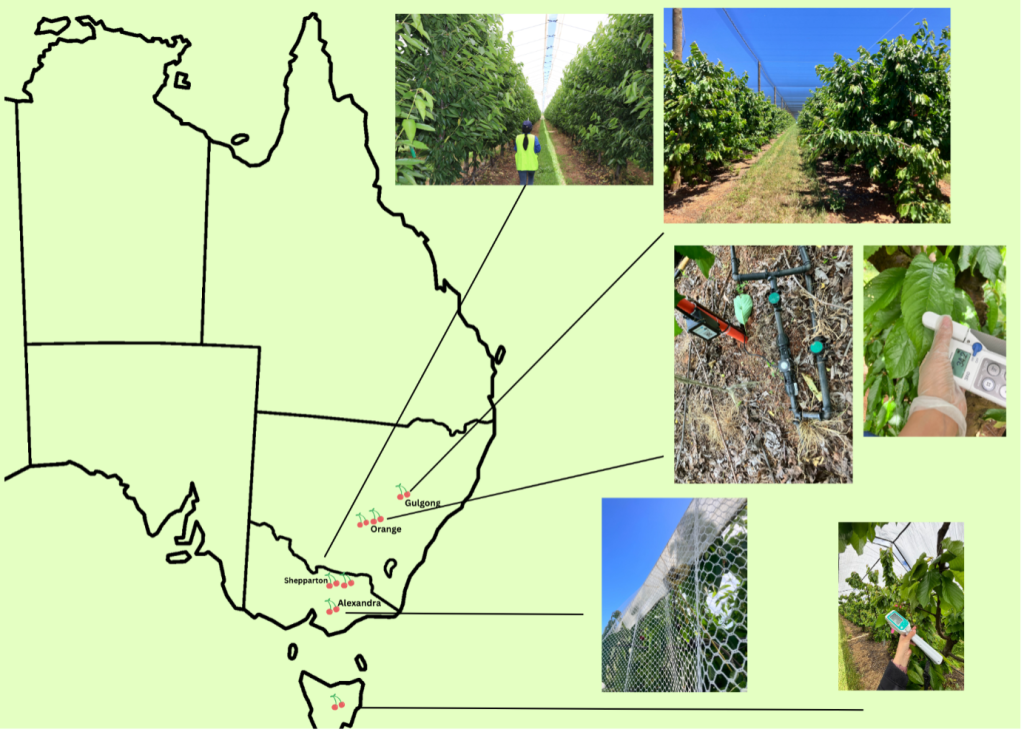
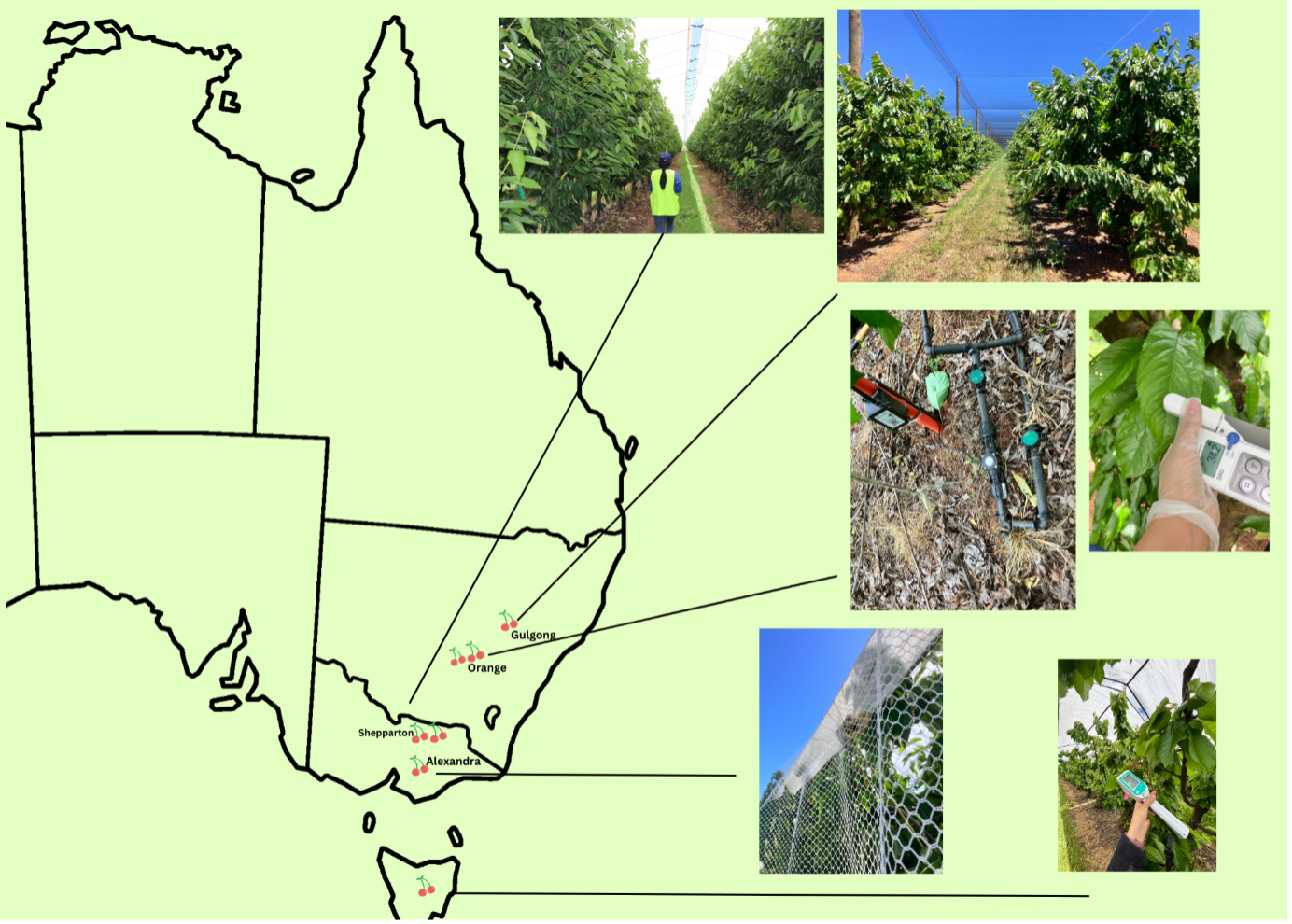
- At least 8 case studies involving trials with growers in NSW, Vic and Tas that will improve knowledge about PCS effects on orchard microclimate and cherry production, and management practices under PCS for producing high-quality fruit.
- Extension activities, including workshops and orchard walks, to communicate project findings.
Protected Cropping Case Studies
As part of this project, a series of grower-focused case studies are exploring protected cherry production across different regions, systems and management challenges. Trials are ongoing, with results to be shared as they become available.
Project Resources
Protected cropping project resources NSW DPIRD website
Project Team

Dr Summer Song
Project Officer (Digital Agriculture), NSW DPIRD
Dr Summer Song currently runs the NSW DPIRD protected cropping project in sweet cherries, in which she is investigating the effects of rain covers and bird netting on orchard microclimate conditions and cherry quality. She has skills and experience in on farm trials, digital agriculture, precision agriculture, participatory research, adoption, and behaviour change.
Jessica Fearnley
Development Officer (Temperate Fruits), NSW DPIRD
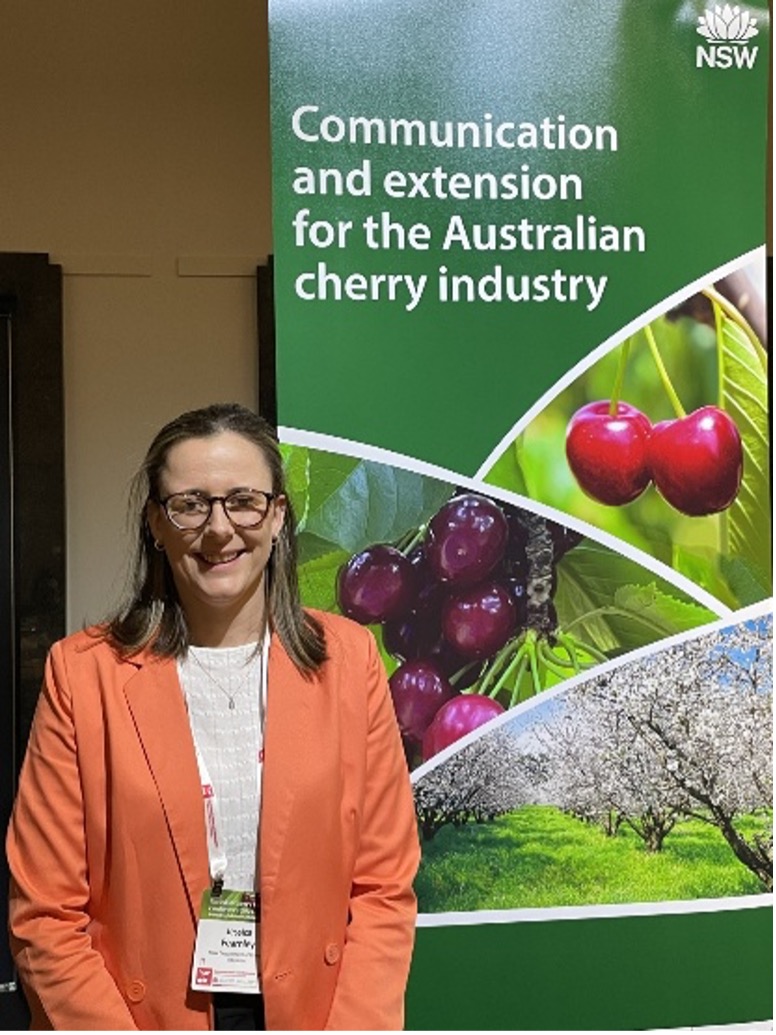
Jessica is passionate about communicating and working with growers and the industry on challenging issues. Her main research areas include developing adaptation strategies to a changing climate, improving soil health and extension. Jessica is the National Extension Manager for the Australian cherry industry and is the project lead for the industry extension and communication project, funded by Hort Innovation. Jessica is currently studying for her PhD through a partnership between NSW DPIRD and the University of Tasmania and is investigating soil carbon sequestration in perennial orchards.
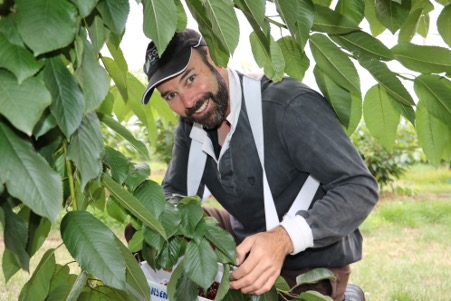
Professor Dugald Close
Deputy Director, Tasmania Institute of Agriculture, Tasmania
Professor Dugald Close is a horticultural scientist who has developed and led large multidisciplinary research teams, supervised 25 PhDs to completion, currently supervises 15 PhD candidates and has produced a strong track record of applied outputs including technical reports, industry and peer reviewed conference papers, fact sheets and industry presentations, demonstrated by more than 200 publications. For more than 25 years, Dugald has been actively researching water, nutrition, plant growth regulators, and carbohydrate ecophysiology for growing systems for cool climate horticultural and extractive crops, with a particular interest in sweet cherries. Dugald understands the need for the successful application of research into industry practice and that it is enabled by trusted partnerships and collaborations.
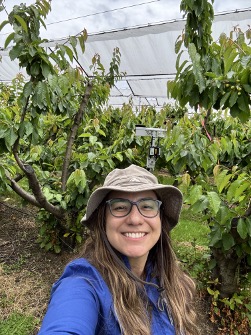
Dr Leticia Reis
Tree Crop Physiologist, Tasmania Institute of Agriculture, Tasmania
Leticia brings over 10 years of experience in innovative research on tree crop production, combining agricultural technology and data analytics. Her work emphasises sustainable systems and community collaboration. She aims to bridge the gap between scientific innovation and practical applications, supporting long term sustainability in agriculture.

Oliver Overman
Extension Officer, Tasmania Institute of Agriculture, Tasmania
Oliver has been working as a development, technical and extension officer with TIA since January 2025. Before joining TIA, he worked in the wine industry, growing grapes in Tasmania’s Derwent Valley. Drawing on his own personal experience as a grower, Oli understands the value of developing grower led trials to answer real world farmer questions. He will be working with cherry producers in Tasmania to establish and facilitate grower trials, develop case studies and extension materials for the Optimising Protected Cherry Production project.

Associate Professor Nigel Swarts
Researcher, Tasmania Institute of Agriculture, Tasmania
Nigel specialises in tree crop physiology and sustainable agricultural practices. His work emphasises optimising nutrient management systems, particularly nitrogen, to enhance productivity and reduce environmental effects. His research focuses on the complex interactions between nutrient cycling, soil health, and plant productivity, specifically in perennial fruit crops such as cherries, apples, and wine grapes. His studies delve into how nitrogen, a critical element for plant growth, can be used efficiently to maximise yield while minimising ecological consequences. This innovative work is central to advancing global agricultural practices and promoting sustainability. Nigel is actively involved in various collaborative research projects. He currently supervises 12 PhD candidates, fostering the development of new experts in agriculture and horticulture.
Project Delivery Partners and Funding
New South Wales Department of Primary Industries and Regional Development (NSW DPIRD)
For more than 130 years, NSW DPIRD has provided support and world-class research to develop our primary industries so they can excel on both the domestic and global stages. Cherries have been a key portfolio for NSW DPIRD with major achievements in the areas of market access, including facilitating trade and relationships into key Asian markets, post-harvest and end-point treatment research to ensure protocol markets are satisfied, critical biosecurity research and management of the extension and communication project.
The Tasmanian Institute of Agriculture (TIA)
The Tasmanian Institute of Agriculture (TIA) is a unique collaboration between the Tasmanian State Government and the University of Tasmania (UTAS) with a well-recognised history of converting research to practise change through its integration of research, development, extension and education. TIA manages a research portfolio in excess of AUS$20 million in perennial horticulture, industrial and vegetable crops, dairy and food safety. TIA has built a strong reputation with the Australian cherry industry and is a global leader in research into rain covers and cherry production.
This project has been funded by Hort Innovation, using the Cherry research and development levy and contributions from the Australian Government. Hort Innovation is the grower-owned, not-for-profit research and development corporation for Australian horticulture. The project is led by NSW Department of Primary Industries and Regional Development in partnership with Tasmanian Institute of Agriculture.