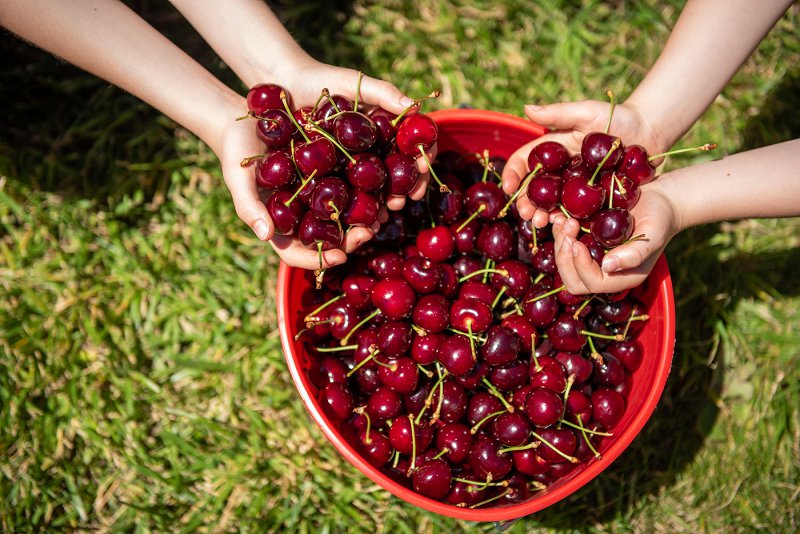
Tasmanian Institute of Agriculture cherry researchers are investigating optimal Gibberellic acid (GA3) strategies to improve fruit firmness and quality for export markets.
Project leader, Dr Alieta Eyles, says, “It’s important that the research reflects the different growing conditions and protected cropping systems under which the Tasmanian industry is operating, to better understand how the trialled strategies improve fruit development and ripening in readiness for export. It’s all about maximising the profitability of the exported product.”
The project has released an update on the learnings over three seasons, with a fourth in the planning. The fact sheet overviews the meta-analysis results to date across different timing, rates of application, and training and cover systems.
Access the fact sheet directly from TIA’s website here.
For more on the extensive research underway by TIA under this program of research: Sustainably growing horticulture value in cool climate Australia | Tasmanian Institute of Agriculture
This project is part of the Sustainably growing horticulture value in cool climate Australia (AS20004) program, funded through Hort Innovation Frontiers with contributions from the Australian Government, and co-investment from the Tasmanian Institute of Agriculture-University of Tasmania. It is supported by local industry partners Reids Fruit, Hansen Orchards, Wandin Valley, Stonecrest Cherries and Lucaston Park.